
What I Heard at National Portfolio Day
What I Heard at National Portfolio Day
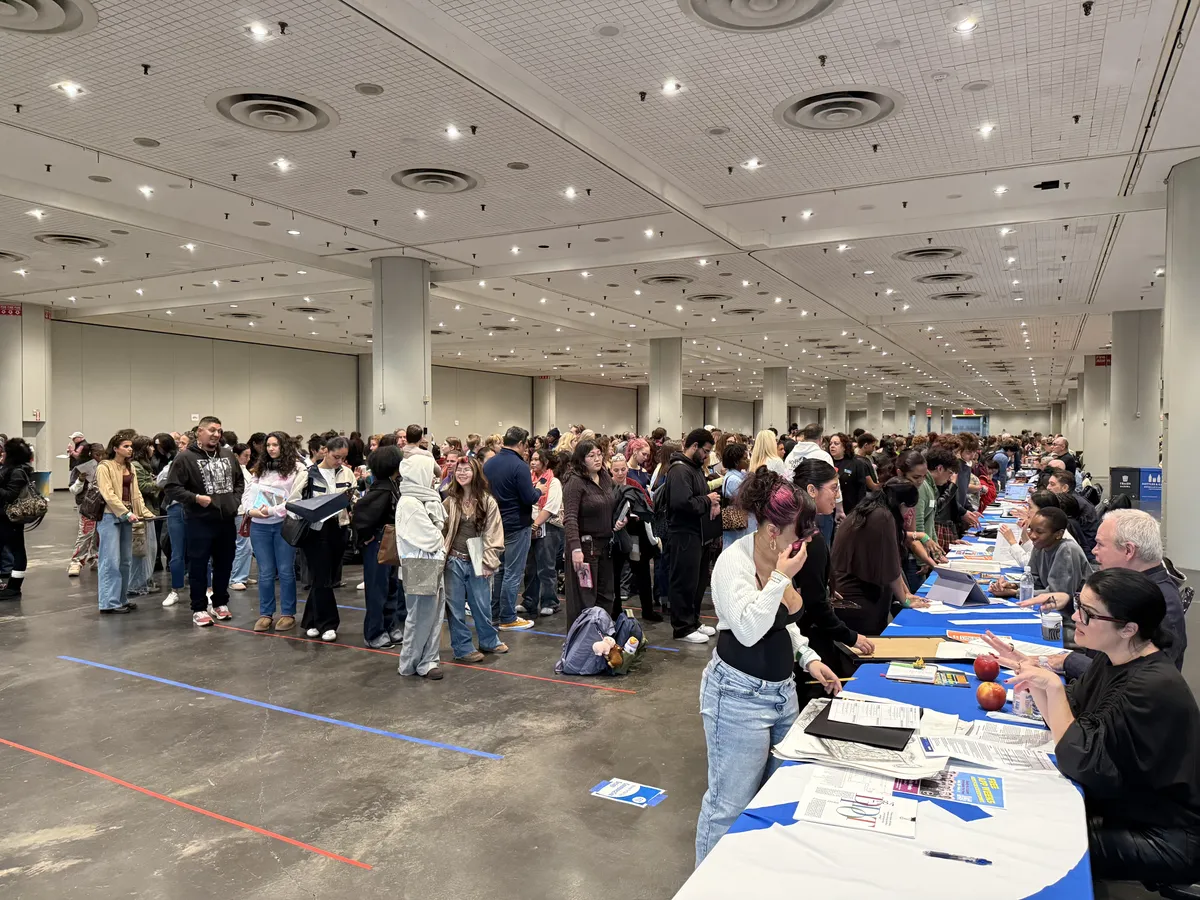
If you have never been to National Portfolio Day in New York, picture the Javits Center filled wall to wall with tables, and a line in front of nearly every one. I spent the day there with students, and by mid-afternoon the hall was packed.
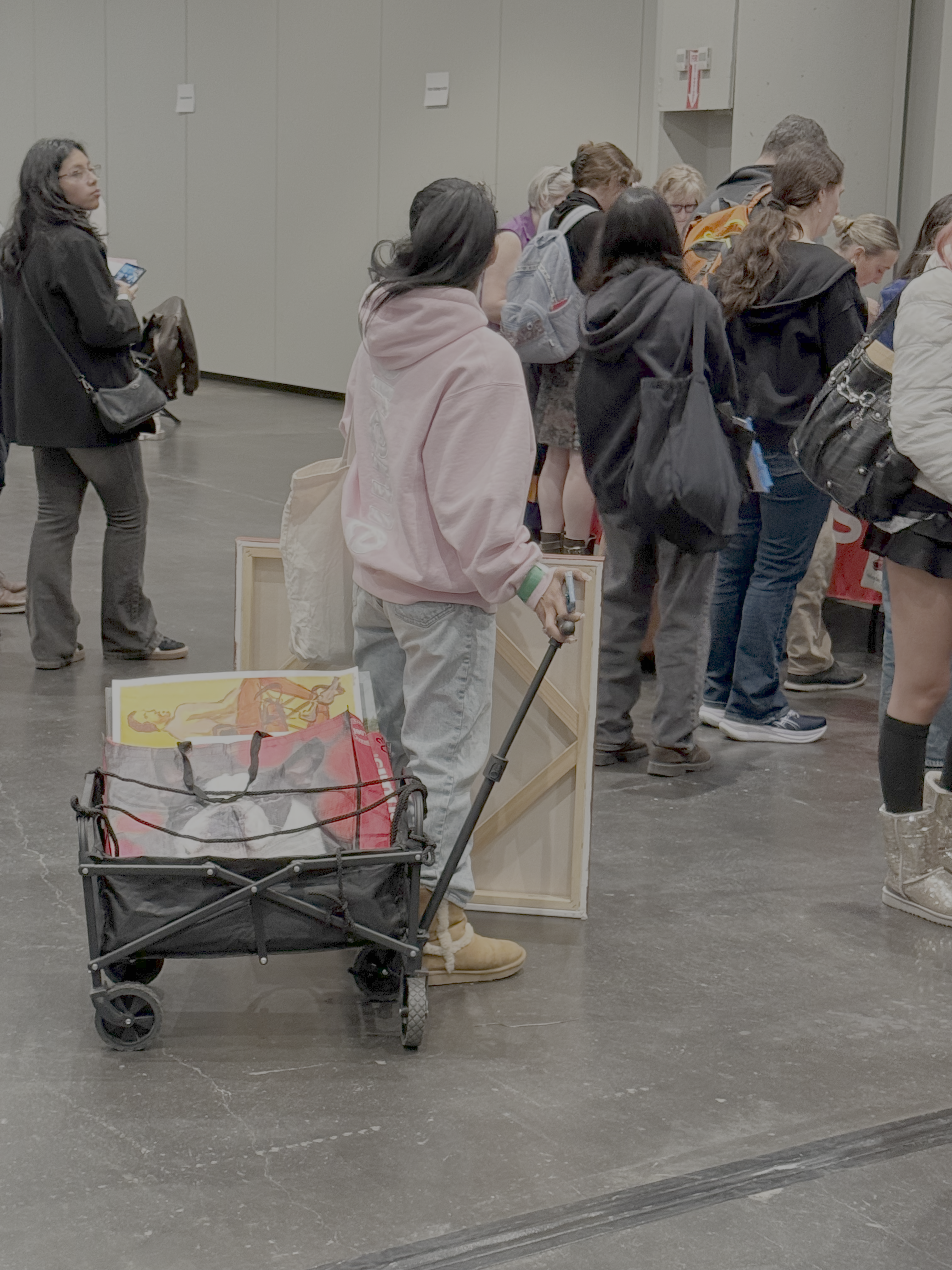
Teens came with portfolios under their arms, sketchbooks in tote bags, iPads, laptops, rolled drawings, even a cart or two. Behind the tables sat admissions representatives from art and design schools across the country: Pratt, Parsons, SAIC, VCU, Ringling, RISD, FIT, Moore, Purchase and many more, all under one roof.
Between reviews, I talked with as many of those representatives as I could. I wanted to hear, in their words, what makes a portfolio work. Different schools, different programs, and still the same message kept coming back.
What admissions kept telling me
The representatives I spoke with agreed: they want to see how you think. A stack of finished, polished pieces is not enough on its own. Here is what they said makes the difference.
Process work. Studies, thumbnails, failed attempts, the version before the version. Reviewers want to see how an idea grew, not just where it landed. I saw numerous critiques where the admissions counselor asked the student to show their sketches for particular finished artworks. Some students came prepared to show their process and discuss their work.
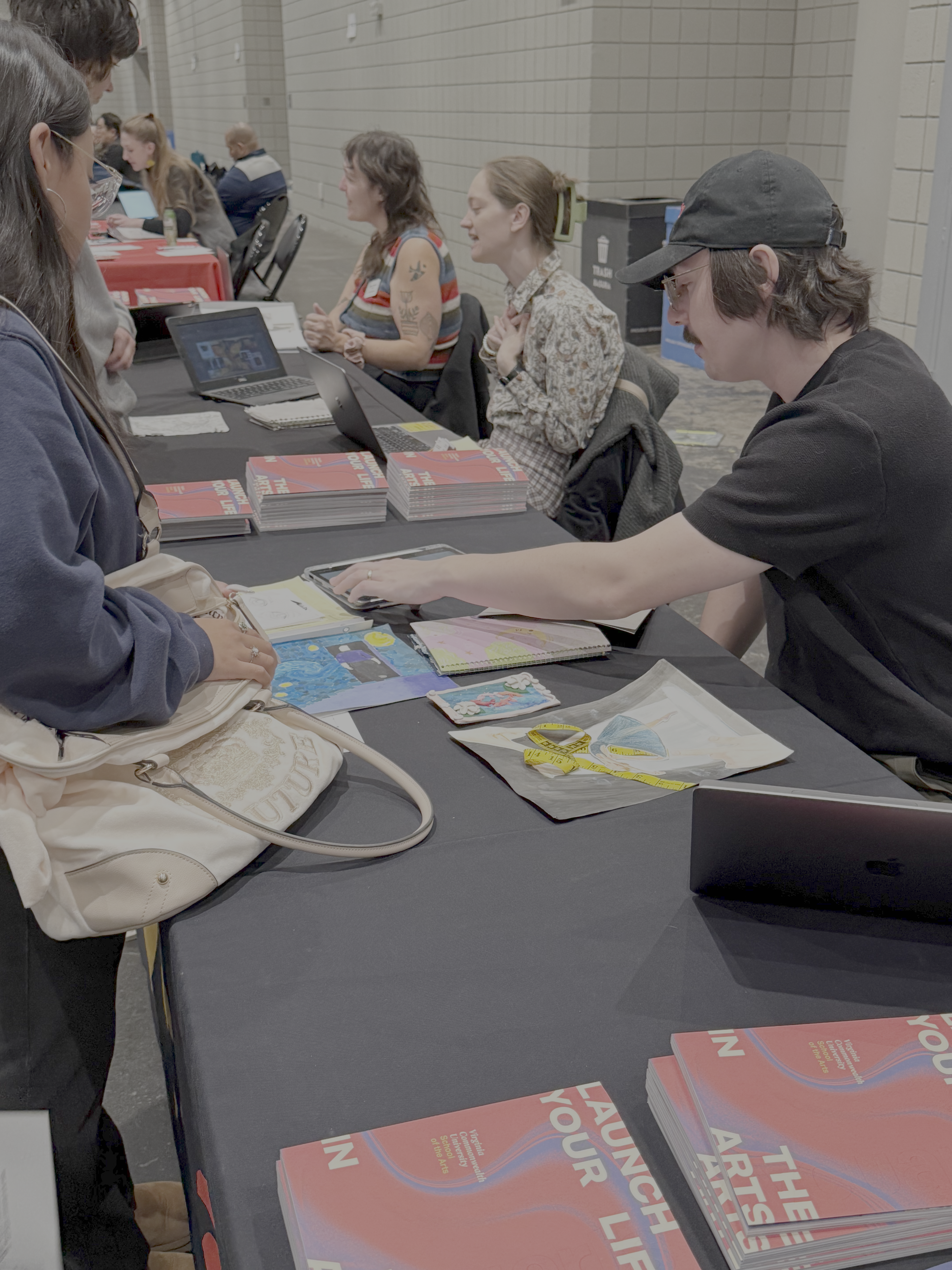
Sketchbooks. Yes, they really want your sketchbook! It is where your thinking lives, and it shows curiosity in a way finished work often can't. Bring it, even if it feels messy. Mistakes and failed artworks in there show that you are experimenting with ideas and materials.
A sustained investigation. Stay with one question, subject or idea long enough to push it somewhere unexpected. A body of related work shows commitment and depth, which is exactly what college studios ask of you. I saw excitement when students went through their AP sustained investigations with reviewers.
Range. Physical work and digital work. Drawing from observation alongside experiments in material and approach. Range tells reviewers you can adapt and take risks. Students that came in with only black and white drawings were encouraged to expand their use of art mediums.
Artistic voice. Underneath everything, they are looking for work that feels like it could only have come from you. Voice isn't a style you pick. It comes from making a lot of work and paying attention to what you keep coming back to. That is the most important part of a portfolio, that it shows who you are.
What I noticed at the tables
Watching review after review, a few things stood out.
The best conversations happened when students could talk about their work. A reviewer would turn a page and ask, "What made you try this?" The students who had an answer got a real conversation, not just a quick verdict.
Some students brought everything, and some brought a careful selection. Both can work, but a focused set that tells a story usually gets more useful feedback in a short review. One reviewer blatantly said to a student that they have limited time with each portfolio and the pieces should make sense immediately or he will quickly just move to the next.
Feedback came in real time, and it was specific. Reviewers pointed at a piece and said what was working, what to push and what to cut. Students who took notes left with a plan. Students who didn't were left trying to remember it all later. There were happy students and parents, and there was disappointment and anxiety in the room as well.
What this means for your portfolio
None of this was news to me. I spent 36 years teaching high school and college art and helping students build portfolios, and these are the same things I now teach online in Art Portfolio Prep. Still, it is good to hear it straight from the people reading the applications.
If you are building your portfolio now, start here:
Keep a sketchbook going, and let it be messy and honest.
Save your process: photograph studies, early versions and experiments.
Pick one idea and investigate it across several pieces.
Try something new in materials or approach this month.
Practice talking about why you made what you made.
This is the heart of Art Portfolio Prep, my program for high school students applying to art colleges, BFA programs and AP Studio Art. It is built around one idea: build a portfolio that shows how you think as an artist. If you want guidance getting there, I would love to help.


